
Skip to content
  • There are no suggestions because the search field is empty.
Close
  • Products
  • Services
  • Applications
  • Resources
  • Company
  • Support

How to Choose the Right Pyranometer: A Practical Guide to Minimising Revenue Leakage Risk

How to Choose the Right Pyranometer: A Practical Guide to Minimising Revenue Leakage Risk

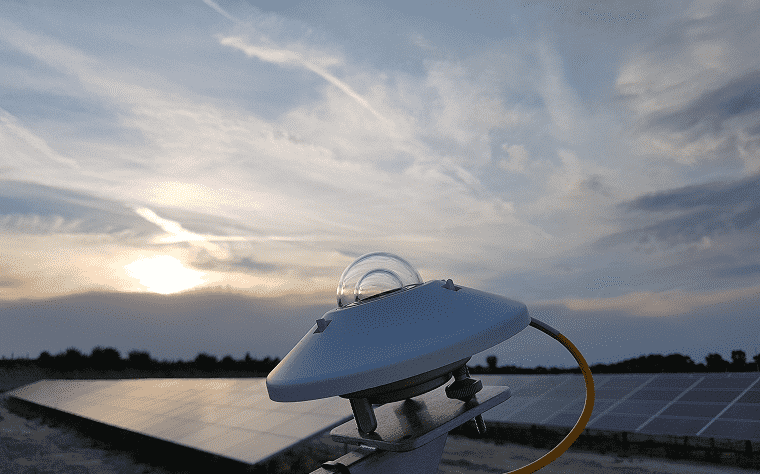
Accurate irradiance measurements play an important role in solar performance monitoring. They support performance ratio calculations, asset management decisions, warranty verification, and long-term performance assessments.

Because irradiance data serves as the reference point for many operational and financial evaluations, the quality of the measurement directly influences the confidence that stakeholders can place in the resulting insights.

Choosing the right pyranometer therefore involves more than selecting a sensor that meets a specification. It requires understanding how measurement uncertainty, environmental conditions, and long-term stability can affect data quality throughout the life of a project.

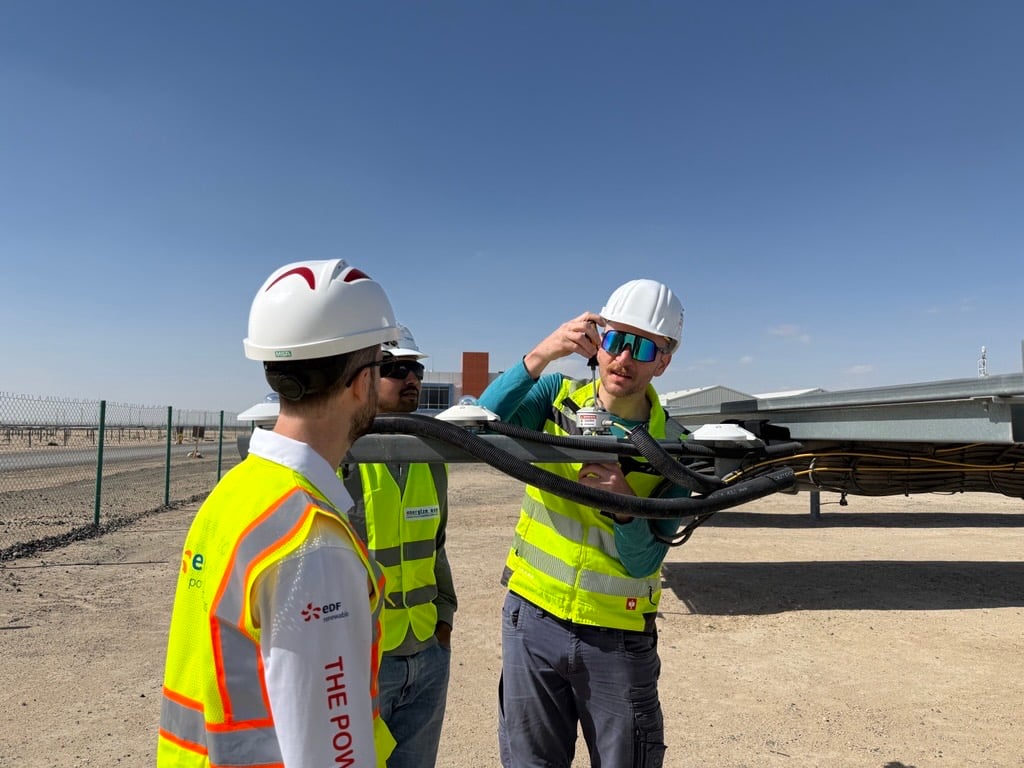
In this webinar, our experts Craig and Udo explain the role of pyranometers in PV performance monitoring and share practical guidance on selecting the right instrument for different applications. They also explore the standards that govern irradiance measurements and discuss how seemingly small measurement errors can influence performance assessments over time.

 
Watch the webinar below to learn more.


Why Accurate Irradiance Measurements Matter

Solar irradiance describes the amount of solar radiation reaching a surface and is measured in watts per square metre (W/m²). For PV applications, irradiance measurements provide the basis for evaluating plant performance and understanding how much solar energy was available to the system.

Depending on the application, solar professionals may monitor:

  • Global Horizontal Irradiance (GHI)

  • Plane of Array Irradiance (POA)

  • Diffuse Horizontal Irradiance (DHI)

  • Direct Normal Irradiance (DNI)

  • Reflected irradiance measurements

  • Albedo, particularly for bifacial system

Reliable irradiance data helps establish confidence in performance analysis and supports more informed decision-making throughout a project's lifecycle.
 

Measurement Quality Influences More Than Performance Monitoring

A pyranometer plays a central role in performance monitoring because irradiance data forms an important input to performance ratio calculations and other operational metrics.

When measurement uncertainty increases, confidence in those calculations decreases accordingly.

This is particularly important for organisations involved in:

  • Performance monitoring
  • Operations and maintenance
  • Asset management
  • Performance guarantee verification
  • Independent engineering assessments
  • Financial and technical due diligence

Selecting a pyranometer that matches the requirements of the application helps ensure that decisions are based on reliable and representative data.

Looking Beyond ISO Classifications

ISO 9060:2018 establishes internationally recognised classifications for pyranometers and defines performance requirements for parameters such as directional response, temperature response, non-linearity and thermal offsets. The standard classifies instruments as Class A, Class B or Class C.

However, classification alone does not tell the full story.

As our experts explain in the webinar, instruments that meet the same classification can still exhibit different performance characteristics and levels of uncertainty under real-world operating conditions.

For this reason, it is often useful to evaluate additional factors such as calibration uncertainty, directional response and long-term stability when comparing instruments.
 

Measurement Uncertainty in Practice

No measurement is entirely free from uncertainty.

The objective is not to eliminate uncertainty, but to understand it and minimise it where practical.

Several factors contribute to overall measurement uncertainty, including:

  • Instrument performance characteristics
  • Sensor alignment
  • Environmental influences
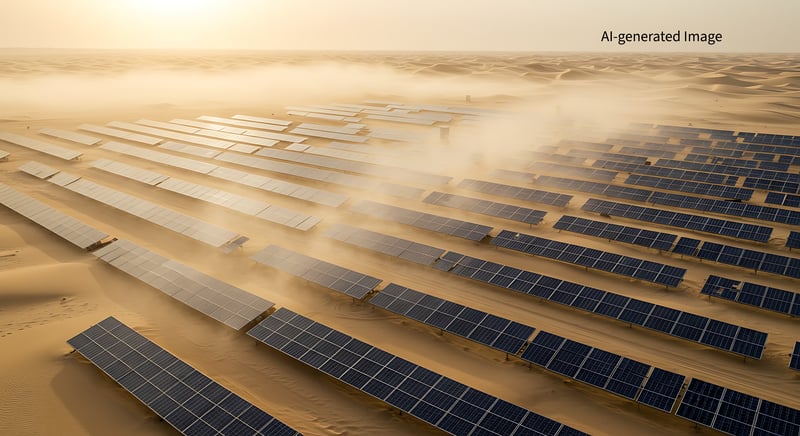
  • Dome contamination and soiling
  • Long-term sensor drift

Each of these factors can affect data quality over time if they are not addressed through appropriate sensor selection, installation and maintenance practices.

Understanding potential sources of uncertainty helps project teams build greater confidence in performance data and the decisions derived from it.

Environmental Conditions Influence Performance

The operating environment plays an important role in sensor performance.

Dew, frost, snow, humidity and soiling can all affect the amount of solar radiation reaching the detector and therefore influence measurement quality.

When selecting a pyranometer, it is important to consider local site conditions and evaluate whether additional features may be beneficial. For example, integrated heating can help reduce the impact of dew and frost in climates where these conditions occur regularly.
The most suitable solution will depend on the specific environmental challenges of the site.
 

Long-Term Stability Supports Long-Term Confidence

Solar assets often operate for decades, making long-term measurement stability just as important as initial accuracy.

Over time, all sensors experience some level of drift. Maintaining confidence in performance data therefore requires consideration of factors such as calibration intervals, long-term stability and proven field performance.

When evaluating irradiance measurement solutions, it is worth considering not only how a sensor performs when first installed, but also how reliably it continues to perform throughout its operational life.

Long-term stability helps support data consistency and contributes to more reliable trend analysis, performance assessments and operational decision-making.

Choosing the Right Pyranometer for Your Application

The most appropriate pyranometer depends on the goals of the monitoring system and the requirements of the project.

Considerations may include:

  • Required monitoring class
  • Application type
  • Environmental conditions
  • Performance monitoring objectives
  • Measurement uncertainty requirements
  • Long-term maintenance strategy

Taking these factors into account helps ensure that the selected instrument is aligned with both technical requirements and long-term project objectives.

Building Confidence Through Measurement

Reliable irradiance data supports reliable performance insights.

Whether the objective is monitoring system performance, supporting operational decisions or maintaining confidence in long-term asset performance, the quality of the measurement remains fundamental.

By understanding the factors that influence measurement uncertainty and selecting a pyranometer that matches the requirements of the application, solar professionals can establish a strong foundation for accurate and meaningful performance monitoring.