Pyranometers

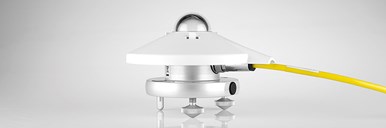
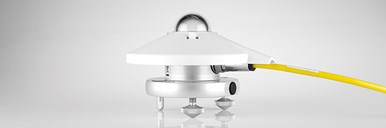
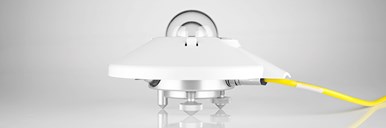
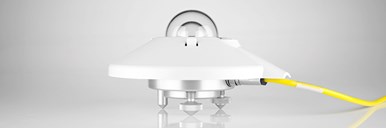
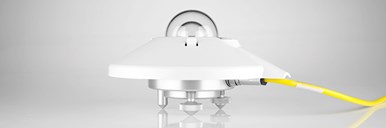
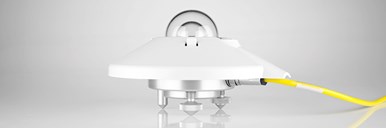
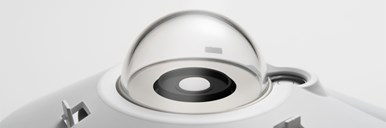
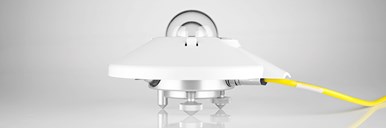
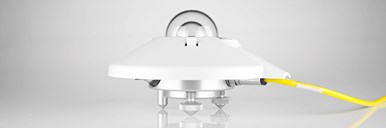
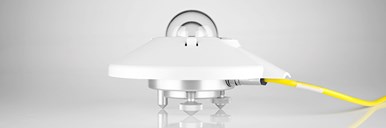
Pyranometers are radiometers designed for measuring the irradiance on a plane surface, normally from solar radiation and lamps.

The Kipp & Zonen range of thermopile-based pyranometers has been in production for several decades and is respected around the world for the measurement of solar irradiance to World Meteorological Organisation and ISO 9060:1990 standards.

The instruments are used in meteorological research, solar energy research, material testing, climate control in greenhouses, building physics, science and many other applications.

The CMP series of pyranometers have ergonomic features to facilitate installation, maintenance, and exchange for recalibration.

The SMP series are the world’s first smart pyranometers with built-in intelligence. Building on the proven CMP series design and measurement technology they add digital signal processing to improve performance and interfaces optimised for industrial data acquisition and control systems.

Our pyranometers are easy to use and are all supplied with calibration certificates that are traceable to WRR (World Radiometric Reference). All instruments have environmental protection class 67.

CM 4

The CM 4 High Temperature Pyranometer is a radiometer specially designed for measuring solar or artificial light irradiance under the most extreme temperature conditions.

CMP 11

Pyranometer for meteorological networks, solar energy collector testing, materials testing.

CMP 21

Pyranometer for Meteorological networks, reference measurements in extreme climates, polar or arid

CMP 22

Pyranometer for Scientific research requiring the highest level of measurement accuracy and reliability.

CMP 3

The CMP 3 is a low cost pyranometer for accurate routine measurements in many applications.

CMP 6

Pyranometer for good quality measurements for green-house climate control, field testing

SMP11

Exceeds the requirements for ISO Secondary Standard pyranometers. Smart Pyranometer SMP11 is the ideal choice for high quality solar radiation monitoring.

SMP3

Fastest and best performing ISO 9060 Second Class pyranometer. Smart Pyranometer SMP3 is perfect for monitoring solar energy installations, agriculture, horticulture, hydrological and industrial applications.

SP Lite2

SP Lite2 is ideal for measuring available energy for use in solar energy applications, plant growth, thermal convection and evapotranspiration.

Related Questions

If I use a pyranometer under water, can I connect a data logger to it ? I am using a ventilation unit on the pyranometer. Do I need to put this on 5W or 10W? Can I use a pyranometer under water? What is the resolution of a pyranometer? What is the bandwidth of a pyranometer? In our PV application the cable from the CMP 11 (50 meters) will go along other cables that come from the PV panels in which there is a DC voltage and around 100 Amps. Will these cables affect the measurement? Do you have filters that can be used to verify spectral distribution over the following wave lengths? Ultraviolet - B 280-320 Ultraviolet - A 320-360 and 360-400 Visible 400-520, 520-640 and 640-800 Infrared 800-3000nm. Is there a standard product that converts the pyranometer output signal to 0-5V or 0-2V? What parameters or errors should we take into account if the source of light comes from a certain angle? What kind of pyranometer do you suggest for usage inside a greenhouse? What type of pyranometer can I use for my fixed PV panels farm? What type of pyranometer can I use for my solar concentrators farm? What is the calibration frequency of a pyranometer? What does spectral range of 310 – 2800 nm (50% points) mean? Is there a Pyranometer available that has the same spectral characteristics as a PV panel? What is the WMO standard for the pyranometers? Is it possible to connect the Pyranometers to a computer? That way, I could, using software (if there is any available), measures solar radiation all the time, non-stop. I would like to know what kind of output the CMP 6 Pyranometer has (analog or digital)? What voltage range do you have? What is the directional or cosine response? Negative output during nighttime measurements? Solar radiation at the site was greater than 1400 W/m²! Is this reasonable? How does instrument temperature effect radiometer accuracy? Do the pyranometers come with a calibration certificate, NIST traceable? What does Zero Offset A mean? Are there any accessories needed with the Pyranometer to avoid reflected radiation from the surface? Does a Pyranometer require any power?