Brazil is becoming the world leader in clean and renewable energy production from bio-ethanol, which is used both as an alternative and as an additive to fossil fuels, allowing cleaner combustion. With 350 sugar mills, Brazil is the largest sugar cane producer in the world. In 2007/2008 the total production was 496 million tons.
However, during the manual harvesting process the sugar cane fields are burnt, generating large amounts of smoke and particles. Brazil’s goal is to reduce the impact on the environment of the entire process, from crop production to the conversion of sugar into ethanol, as much as possible. To achieve this, accurate monitoring of the atmosphere is of great importance and the advanced aerosol profiling capabilities of the model LR-101-V-200Lidar system will be a key part of the research.
Portable and durable
The Lidar system is durable, portable and accurate under harsh conditions. This is important because the system will be moved around to be operated by several different Brazilian research institutes, located in an area where sugar cane crops are an important economic activity.
The institutions that support this Lidar Project in Brazil are: the Institute of Energy and Nuclear Research (IPEN), the University of São Paulo (USP); São Paulo State University (UNESP) and the Environment Education and Research Center (CEPEMA). The Brazilian oil and energy company Petrobras is the main source of funds for the Lidar Project.
There are already two other Lidar systems in Brazil, but neither of these are portable. One is at IPEN and the other at the National Space Research Center (INPE).
Innovative Lidar design
The compact Raman Lidar system model LR-101-V-200 is equipped with a powerful Nd:YAG Laser source emitting 130 mJ pulses at 532 nm (green). The Cassegrainian receiving telescope has a primary mirror diameter of 200 mm with a custom made reflective coating.
The received backscattered light is filtered using narrow bandwidth hard-coated optical filters and detected using high quality photo-multiplier tube (PMT) detectors. The data acquisition system from Licel ensures an excellent temporal and spatial resolution of the data.
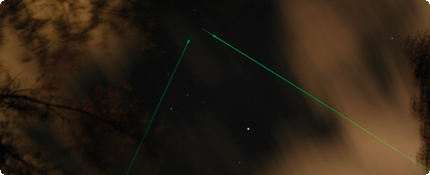
The Lidar can be operated using the integrated industrial PC, or remotely using the built-in Ethernet connection. The entire system is protected by an IP56 enclosure, making it fully weather proof. With every Lidar system a full software suite is included free of charge. This operates the Lidar and offers full data archiving, processing and visualization capabilities. In addition to the ready-to-run programs the source code is also included, allowing expert users to fully customise the software.
The unique features of Raymetrics Lidar systems are ideally suited to projects such as this, where measurements need to be made in different locations.
Kipp & Zonen and Raymetrics, together with local representative Campbell Scientific do Brazil, installed the Raman Lidar System in Sao Paolo.