
El Niño. More Than Resilience. Confidence.
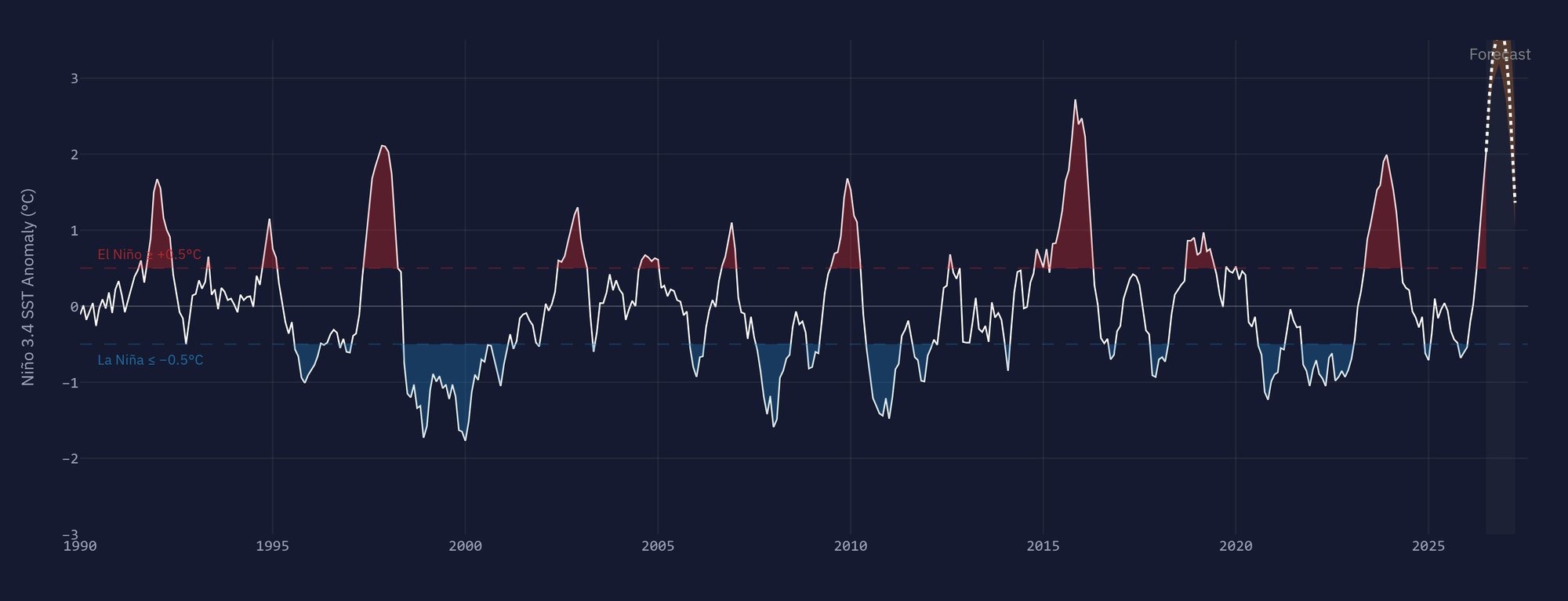
El Niño has been confirmed.
For utility-scale solar operators, that means more than unpredictable weather. It means shifting cloud cover, changing dust and particulate patterns, and precipitation swings that directly affect plant performance — sometimes before anyone notices a problem.
The plants that come through this cycle strongest won't be the ones that got lucky. They'll be the ones that measured what mattered.
Source: The Climate Brink Climate Dashboard, ENSO section. Retrieved from The Climate Brink Climate Dashboard. Accessed August 2026.

ANTICIPATE
Cloud Cover Is Changing. So Is Your Irradiance Assumption.
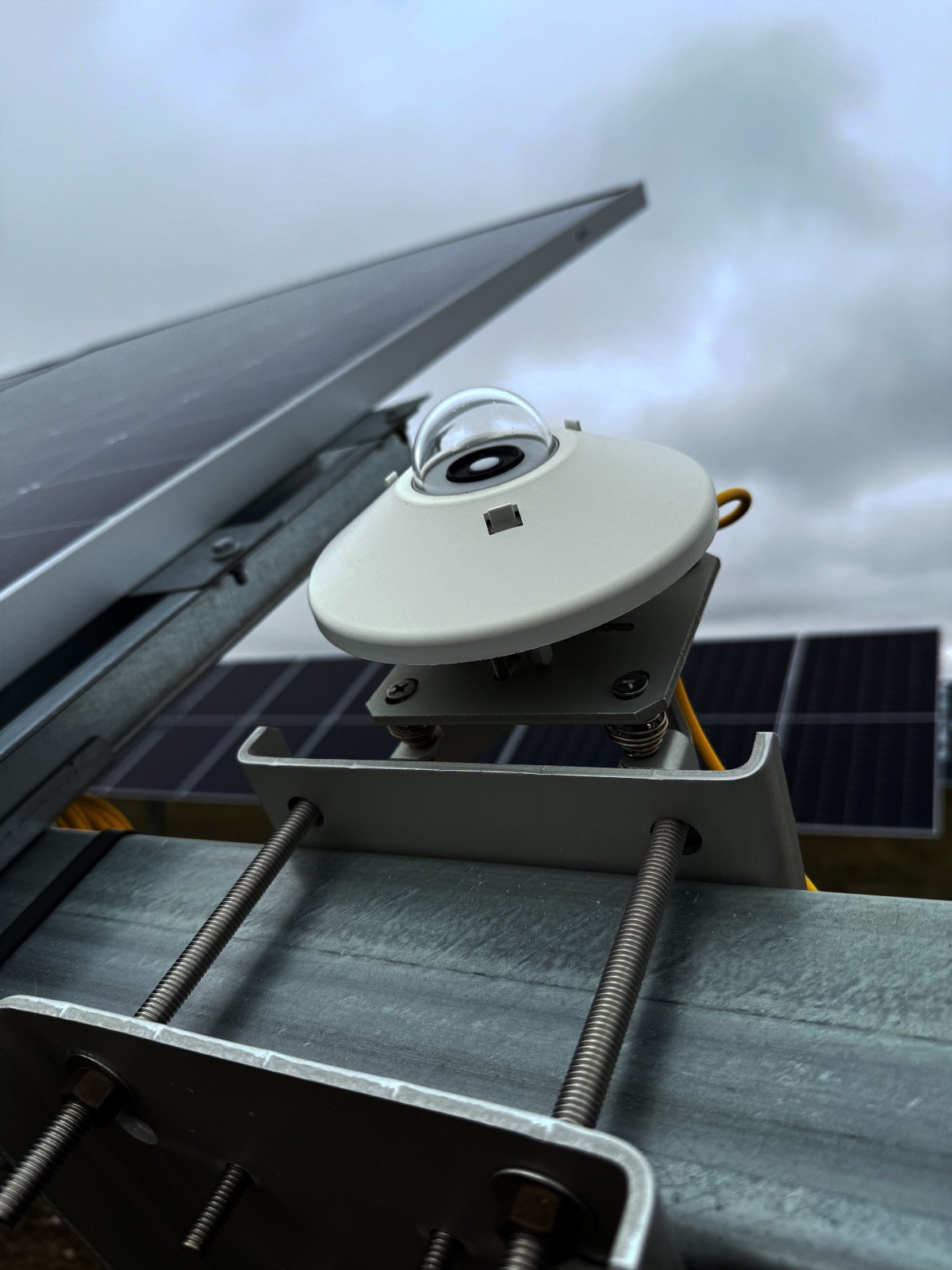
El Niño alters atmospheric behavior in ways that directly influence solar resource availability. For asset managers, that raises a quiet but critical question: how confident are you in the irradiance data your performance models are built on?Measurement uncertainty doesn't start with a bad sensor. It starts long before that — in decisions made during design, installation, and ongoing operations.
Four factors quietly shape how much you can trust your data:
-
Installation discipline. Small errors in leveling, alignment, or mounting stability accumulate over time into real performance discrepancies.
-
Environmental variability. Terrain, tracker position, cloud patterns, and soiling create site conditions that a single sensor rarely captures.
-
Long-term data governance. Without a documented history of calibration, cleaning, and adjustment, it becomes difficult to know whether a performance shift is real — or just drift.
-
Sensor uncertainty. A high-quality Class A sensor is only the beginning. What happens after installation determines whether that quality translates into trustworthy data over the asset's lifetime.
The takeaway is simple: irradiance measurement is a risk-management discipline, not a one-time purchase.
El Niño intensifies atmospheric variability through its peak in December 2026, this is the moment to revisit whether your measurement foundation is built for confidence — or for assumption.
MONITOR
The Hidden Performance Loss You Can't See From the Control Room
When a solar plant underperforms, the cause isn't always obvious. Weather, equipment, temperature, degradation — all compete as explanations.
But one factor consistently hides in plain sight: soiling
El Niño brings both sides of this problem. Regions facing intensified drought will see increased dust and airborne particulate. Regions facing heavier rainfall will see shifting deposition patterns from wind-driven precipitation. Either way, the surface of every module becomes a variable your performance model has to account for.
Not All Soiling Behaves the Same Way
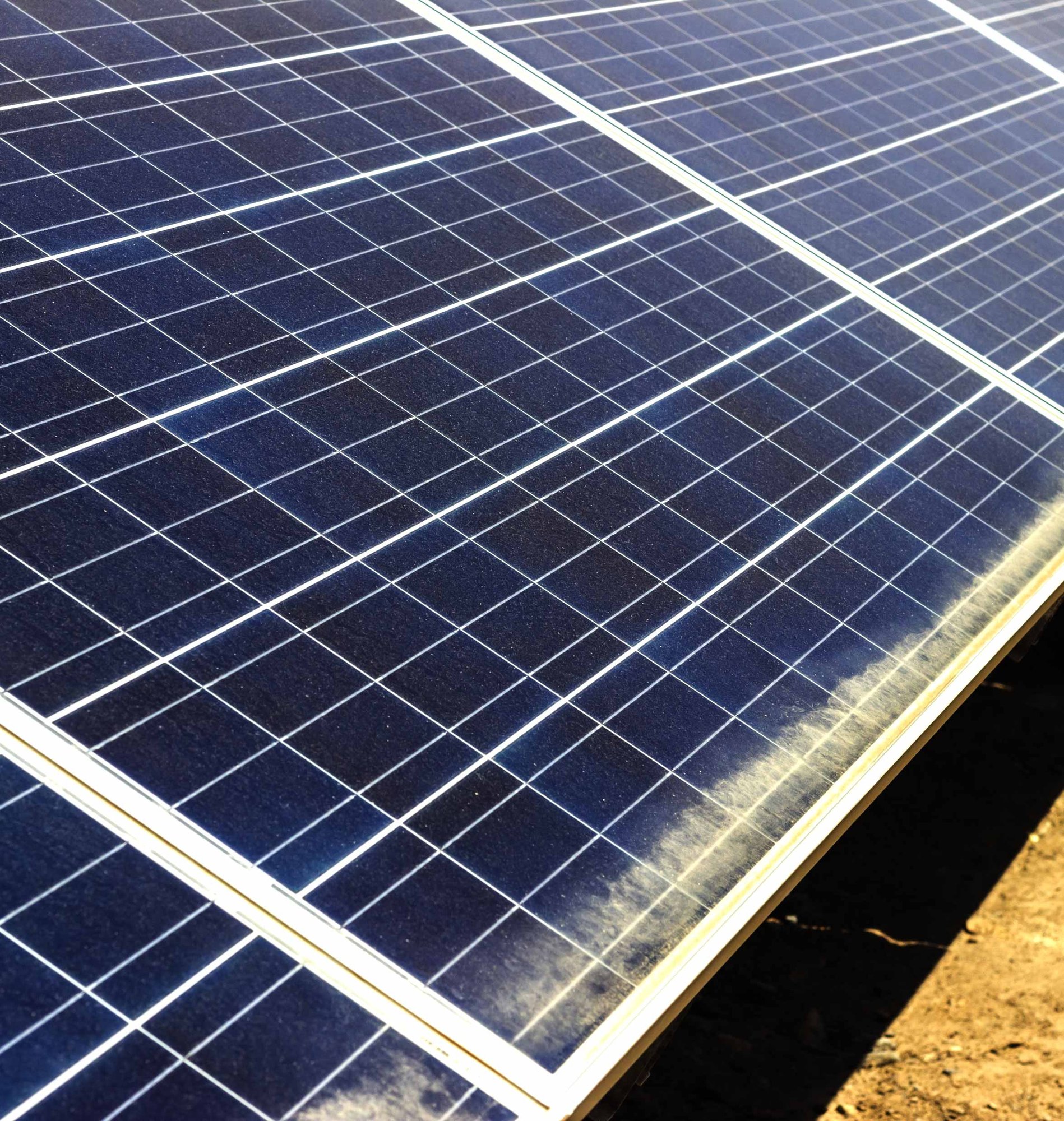
Soiling isn't always evenly distributed. Non-uniform soiling — caused by wind, gravity, and precipitation patterns — often accumulates unevenly along module edges, and it can cause greater power loss than soiling that's spread evenly across a surface.
This distinction matters more during El Niño, when shifting wind patterns and precipitation events can change deposition behavior at your site — sometimes without warning.
Confidence Requires the Right Kind of Measurement
There is no single soiling measurement approach that fits every site. The right method depends on what you need to know:
Optical sensors (like Kipp & Zonen's DustIQ) offer continuous, no-maintenance monitoring — ideal when the priority is low-maintenance visibility into soiling trends.
Reference cell pair systems provide a traditional soiling ratio using a clean/soiled comparison — useful where automated washing systems are already in place.
In-situation IV measurement delivers direct power-loss data on real modules — the most representative option when non-uniform soiling is a known risk.
RESPOND
From Data to Decision
Anticipating conditions and monitoring performance only matter if they translate into action.
That's where confidence becomes tangible: adjusting cleaning schedules based on real soiling data rather than assumptions, validating irradiance inputs before they distort performance ratio calculations, and ensuring measurement systems are positioned to represent what's actually happening across the array — not just at a single point.
For bifacial installations, this becomes even more important. Rear-side irradiance is inherently non-uniform — shaped by ground clearance, racking structure, and even time of day — and can vary by as much as 30% from one edge of a module row to the other. As atmospheric conditions shift through El Niño, operators relying on a single averaged irradiance assumption may be flying without complete visibility into actual plant behavior.
The organizations that respond well share a common trait: they built the measurement foundation before they needed it.
More Than Resilience. Confidence.
RESPOND
When Weather Patterns Shift, So Do the Risks on the Road
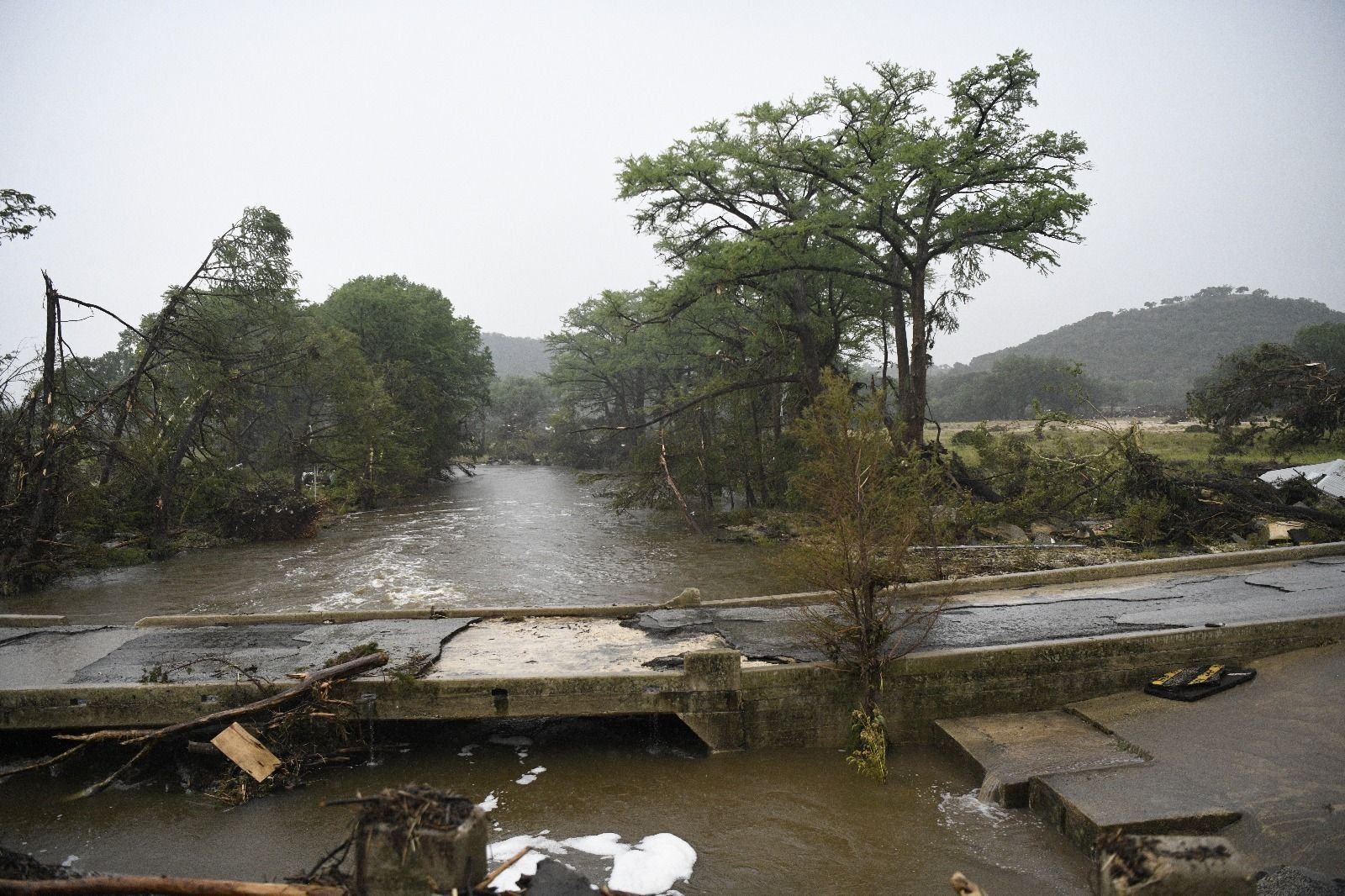
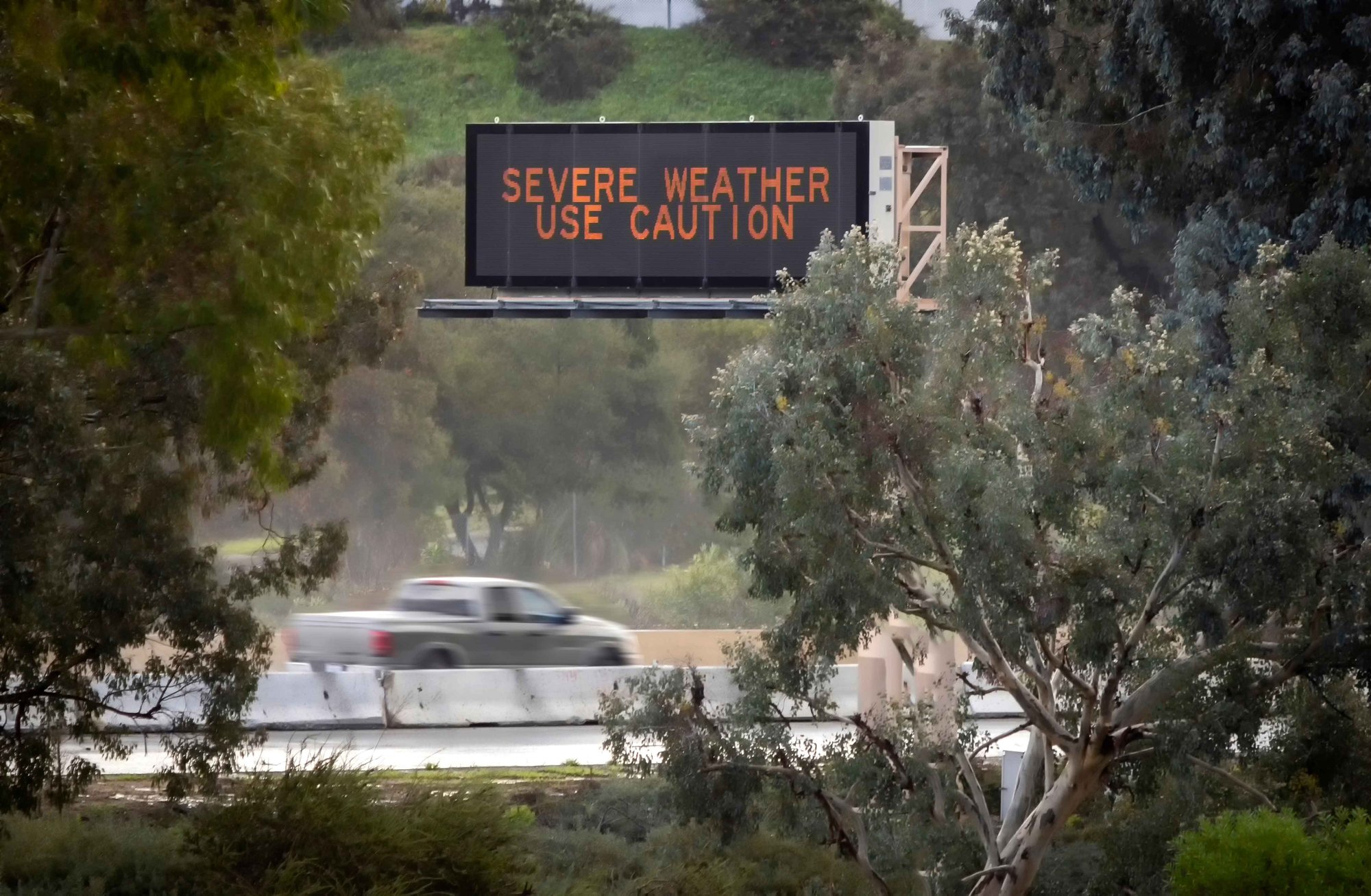
El Niño's influence doesn't stop at the solar field. A stronger jet stream and altered storm tracks often bring unusual winter conditions to regions that don't typically plan for them — creating road hazards that fall outside historical norms.
For transportation and infrastructure managers, the challenge isn't simply "bad weather." It's weather that doesn't match the playbook.
.png?width=960&height=960&name=Frame%20356%20(3).png)
Confidence Starts With Local, Real-Time Visibility
Two proven approaches — both drawn from real-world deployments — show how road weather intelligence translates into safer decisions:
Densifying your monitoring network. The Lufft RoadSmart compact stationary sensor was purpose-built to close coverage gaps that larger, costlier stations leave behind — including installations in exposed locations like bridges. It delivers real-time road condition data (friction, surface state, temperature, moisture) that enables earlier hazard detection, smarter treatment decisions, and faster public warnings — all while reducing chemical usage and lifecycle costs.
Targeted, high-value applications. At a Migros distribution center in Zurich, a coordinated system pairing the mobile/static Lufft MARWIS road sensor with a compact WS600 weather station enabled a heated ramp to activate only when conditions required it — cutting energy use by over 80% while keeping the ramp safe for vehicles and pedestrians. At a municipal level, the City of Solingen deployed a network of WS800 weather stations and NIRS31 road sensors feeding a public smart-city portal, allowing officials to plan selective gritting, cooling measures, and citizen alerts based on hyper-local conditions rather than generalized foreca
The Common Thread. In every case, the value wasn't the sensor. It was the decision the sensor made possible — closing a coverage gap, avoiding an unnecessary energy cost, or getting a warning to the right person in time.
As El Niño increases the likelihood of storms and conditions outside normal seasonal patterns, transportation managers face the same underlying question as solar operators: do you have visibility into what's actually happening, or are you relying on what usually happens?
More Than Resilience. Confidence.
Uncertainty is not new. What's changing is its intensity — and its timeline
With El Niño projected to peak in December 2026, the organizations building measurement discipline into their operations now will be the ones making confident decisions when conditions matter most.
Kipp & Zonen don't just sell instruments. We help people replace assumptions with answers.
More Than Resilience. Confidence.