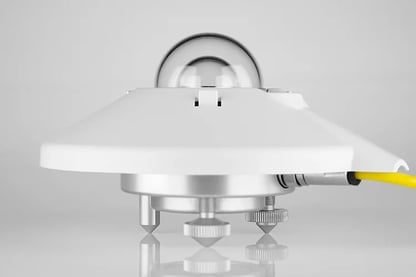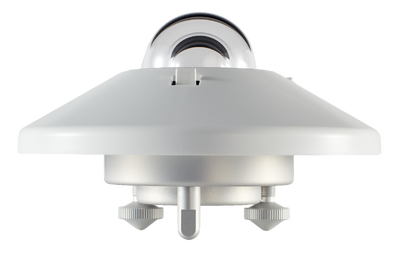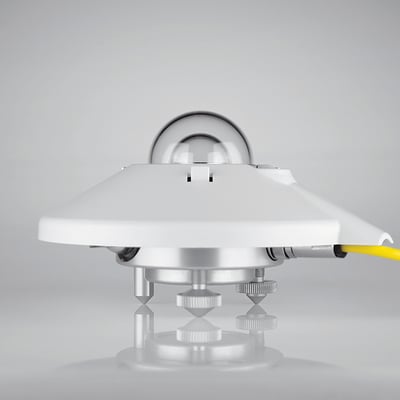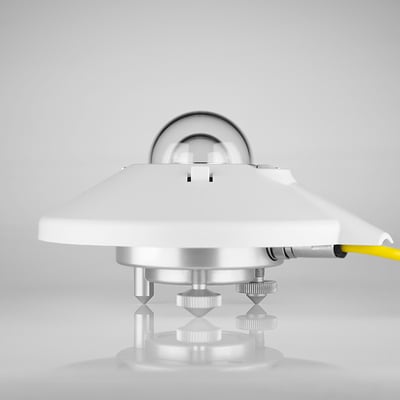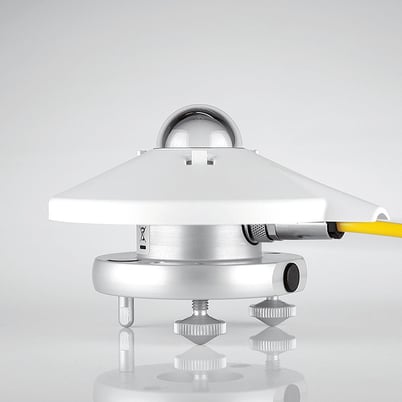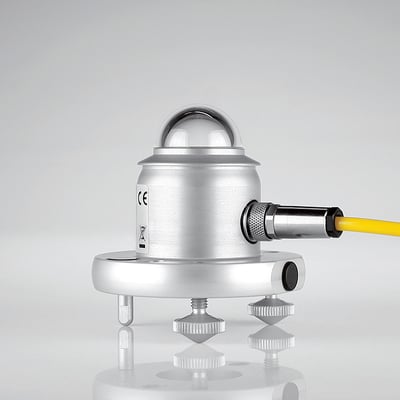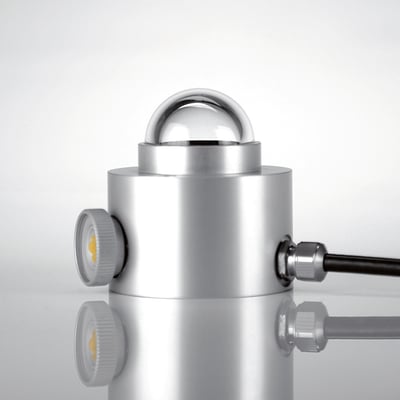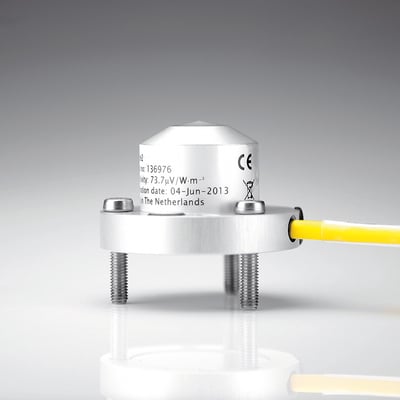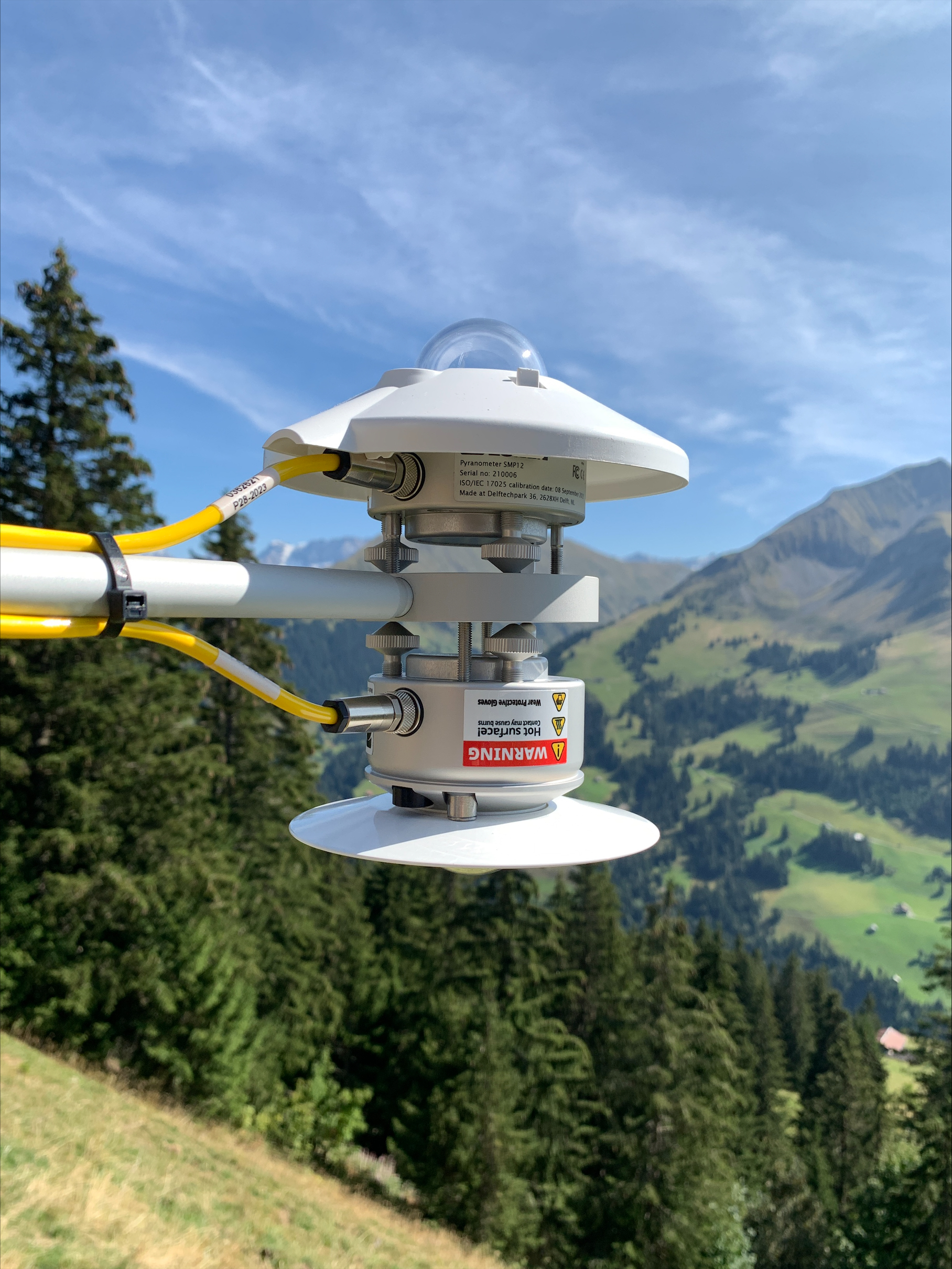



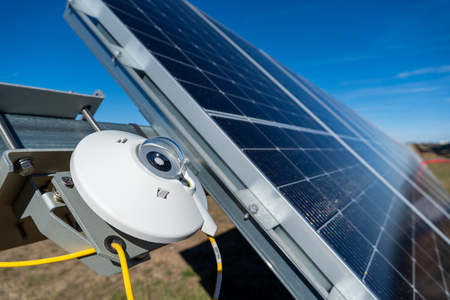
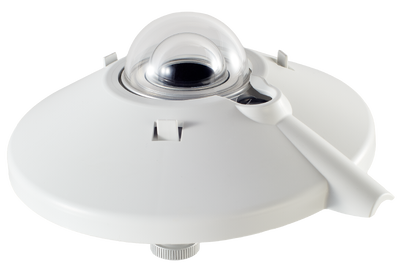
SMP10x Pyranometer

  • ISO 9060  spectrally flat Class A 
  • Internal dessicant and temperature monitoring
  • Ideal for IEC 61724-1 Class A system monitoring
  • RS-485 Modbus® communication
  • Long-term stability (5-year stability rating)
Add this product to basket Request information
Share this page

SMP10x Pyranometer

Engineered for excellence, the SMP10x is an upgraded ISO 9060 Class A smart pyranometer built on the trusted legacy of the SMP10. Designed for solar PV monitoring and SCADA system integration, it delivers unmatched stability, diagnostics, and long-term reliability.
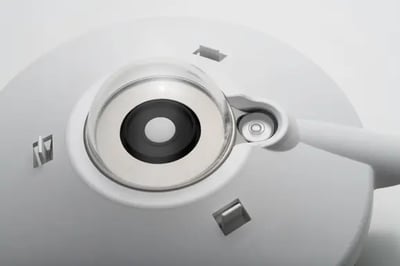
Why Choose SMP10x?


It has an extended stability specification, calibration interval up to 5 years, reducing maintenance cycles and operational costs. With an advanced internal diagnostics, the real-time monitoring of temperature, humidity, and pressure ensures optimal performance in harsh environments. It proactively tracks desiccant health with a saturation warning flag and supporting predictive maintenance with desiccant monitoring system. The main difference from SMP10 is SMP10x has Digital-Only Output, communicates via Modbus RTU, streamlining integration into modern digital infrastructures. SMP10x operates reliably from -40°C to +80°C, with sensor drift reduced to ±0.5% over five years.


Whether you're deploying in desert heat or polar cold, the SMP10x is built to endure. Its internal climate sensors and diagnostics make it the ideal choice for IEC61724-1 Class A systems, ensuring measurement accuracy and system uptime.

Back to productcategory

Specifications

Spectral range (50% points) 285 to 2800 nm
Response time (63%) < 0.7 s
Response time (95%) < 2 s
Zero offset A < ±7 W/m²
Zero offset B < ±2 W/m²
Directional response (up to 80° with 1000 W/m² beam) < ±10 W/m²
Temperature response (-40 to +70°C) < 1 %
Calibration 5 years
Digital output -400 to 2000 W/m²

FAQ

  • Negative output during night-time measurements?
    • This error is related to Zero Offset Type A. Normally this zero offset is present when the inner dome has a different temperature from the cold junctions of the sensor (the instrument housing). Practically this is always the case when there is a clear sky. 

      Because of the low effective sky temperature (< 0 °C) the Earth’s surface emits roughly 100 W/m2 of long-wave infrared radiation upwards. 

      The outer glass dome of a pyranometer also has this emission and is cooling down several degrees below air temperature (the emissivity of glass for the particular wavelength region is nearly 1). The emitted heat is attracted from the body by conduction in the domes, by wind and from the domes through infrared radiation. The heat flow is opposite to the heat flow when absorbing solar radiation and causes the well-known zero depression at night. This negative zero offset is also present on a clear day but is hidden in the solar radiation signal. 

      Zero Offset Type A can be checked by placing a light and IR reflecting cap over the pyranometer. The response to solar radiation will decay with the response time of the instrument, but the dome temperature will go to equilibrium with a time constant of several minutes. So, after about half a minute the remaining signal is mainly Zero Offset Type A. Good ventilation of the domes and housing minimizes zero offsets and increases stability. Using the Kipp & Zonen CVF4 ventilation unit can reduce Zero Offset Type A by about 50 %. 

      Is your question still unanswered? Contact Support
  • Maximum and minimum irradiation quantities?
    • Due to reflection from certain types of clouds the global irradiance at sea level can rise above the extra-terrestrial direct irradiance (the Solar Constant) of 1367 W/m² at the top of the atmosphere (WMO 1982). Values up to 1500 W/m² have been reported. Because the clouds move, this irradiance value mostly appears as short events of a few minutes duration.

      Is your question still unanswered? Contact Support
  • Is the pyranometer calibration affected by the length of the signal cable?
    • With longer cable lengths the impedance increases, however it does not affect the radiometer sensitivity for the following reason. For the SMPX the impedance of the voltage measurement device is at least 1000 times more than the impedance of the pyranometer plus cable. Therefore the current that goes through the readout cable is negligible and won’t generate an offset. 

      The digital RS-485 output can operate over cable lengths up to 1000 m, depending on the baud-rate used. 


      Is your question still unanswered? Contact Support
  • What type of pyranometer can I use for my fixed PV panels farm?
    • For this application the CMP10 and SMP10 are advised as they have an internal drying cartridge that will last for at least 10 years.

      Please note that the pyranometer needs to be mounted in the same angle (POA) as the PV panel. 


      For users that prefer the desiccant visible Kipp & Zonen offers the CMP11 and SMP11 with visible and user changeable desiccant.

      Is your question still unanswered? Contact Support

Accessories

Accessory Description
CMF Mounting Fixtures CMF Mounting Fixtures
More information
CMF1 and CMF4 mounting fixtures for all series pyranometers Add To Basket
Glare Screen Kit Glare Screen Kit
More information
Sun protection screen for downward facing radiometers mounted on an albedo/net radiation mounting plate Add To Basket
CM121B/C Shadow Ring CM121B/C Shadow Ring
More information
To be used with Kipp & Zonen pyranometers, smart pyranometers, pyrgeometers and UV radiometers to shield the instrument from direct radiation. Add To Basket
CVF4 Ventilation Unit CVF4 Ventilation Unit
More information
Ventilating solar radiation instruments improves the reliability and accuracy of measurements and reduces maintenance. CVF4 is a high quality waterproof ventilation unit designed to be used with Kipp & Zonen pyranometers, pyrgeometers, and ultraviolet radiometers. Add To Basket
Adjustable Tilt Radiometer Mounting Kit Adjustable Tilt Radiometer Mounting Kit
More information
Mount a radiometer at a desired solar zenith angle between 0° and 90° to measure tilted global or diffuse radiation. Add To Basket
LOGBOX SE Data Logger LOGBOX SE Data Logger
More information
LOGBOX SE is a weatherproof field data logger with 4G LTE cellular communication. Designed for use with all Kipp & Zonen solar radiation instruments, both analog and Modbus®, including RT1. It is also compatible with DustIQ and Lufft all-in-one weather stations. LOGBOX SE can operate from internal batteries, external DC power or a solar panel. Add To Basket
Smart Powered Hub and Smart Hub Smart Powered Hub and Smart Hub
More information
The Smart Hub is a passive 6 to 1 weatherproof hub for 2-wire RS-485 connections. The Smart Powered Hub adds a heavy duty 2.2A power supply. Add To Basket
PMU485 Smart Setup Hub PMU485 Smart Setup Hub
More information
The PMU485 is a power source and data connection between a Smart Kipp & Zonen device and a PC. Add To Basket
Fixed Feet For Tilted CMP/SMP6-22 Mounting Fixed Feet For Tilted CMP/SMP6-22 Mounting
More information
Kit with two fixed feet for easy installation of POA pyranometers. Add To Basket

Relevant news items

Back to productcategory

Application examples

Back to productcategory